CRAZY TUNNEL: A HIGH-SPEED TEST OF REFLEXES AND FOCUS
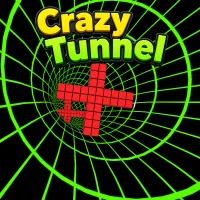
Crazy Tunnel is the ultimate litmus test for your reflexes. Unlike games that offer a gentle learning curve, this fast-paced, first-person arcade challenge throws you into the deep end. It is a high-octane race through a narrow, shifting corridor where the only thing faster than your movement is the rate at which obstacles appear. The ultimate objective is to survive as long as possible and travel the greatest distance. However, as the pace increases, the challenge quickly becomes a true test of focus and reflexes. Dive in now and see how far your reflexes can carry you through the ever-accelerating tunnel!
Highlight Features
- The "camera-eye" view puts you directly in the pilot's seat.
- The longer you survive, the more the world blurs.
- The minimalist 3D design uses sharp color contrasts.
SLIP THROUGH OR CRASH INSTANTLY
The core loop of Crazy Tunnel is a relentless survival sprint. There are no complicated menus or secondary modes; the game focuses entirely on an Endless Tunnel Run. You enter a 3D pipe that twists and turns unpredictably. Your path is blocked by various geometric shapes, all colored a warning red. These obstacles aren't solid walls but rather "gates" with specific gaps. Your mission is to find that narrow opening and align yourself perfectly to slip through. One clip of a wing or a stray movement against a red surface, and the run ends instantly, tallying your final distance.
How to Control
- Simply move your mouse to guide the camera's position within the 3D space.
- Navigate the entire circumference of the tunnel to find the safest passage.
Tips to Play
- Focus your eyes on the horizon of the tunnel rather than the immediate foreground.
- At high speeds, let's use small, jerky mouse movements to stay in control.
- Stay relaxed helps maintain the fluid hand-eye coordination needed for high scores.
DISCOVER MORE HIGH-SPEED TUNNEL GAMES
These titles place you inside fast-moving tunnels filled with obstacles that demand perfect alignment and split-second decisions: